
SSTM hosts training program to enhance science and innovation capabilities of science teachers
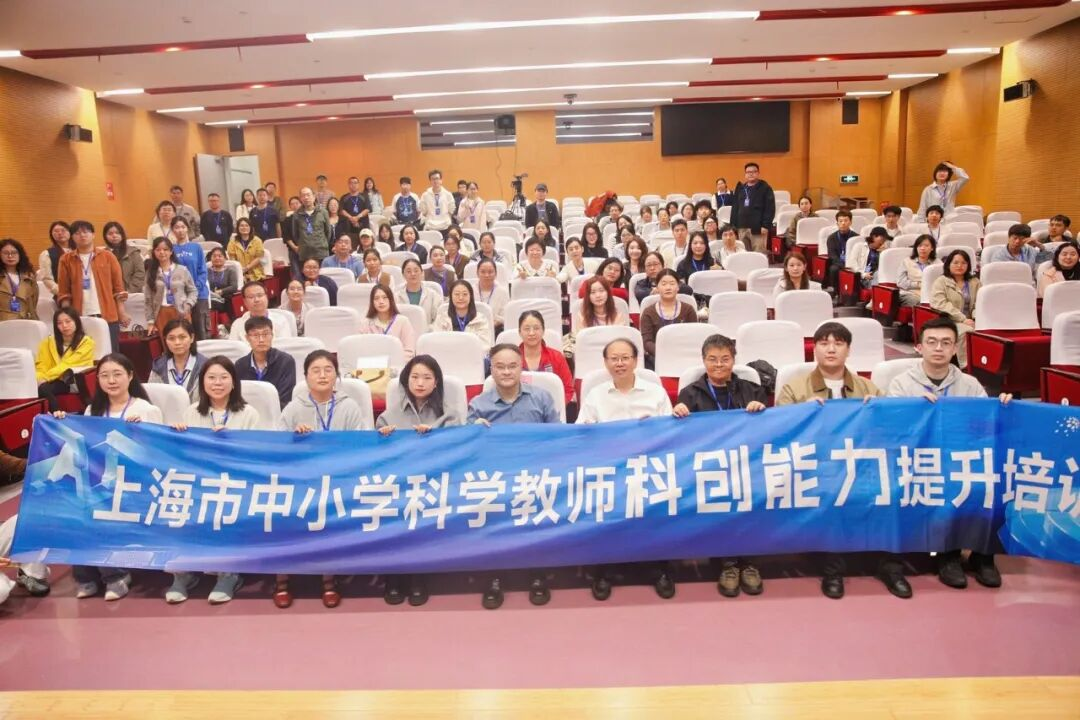
From October 24 to 26, the 2026 Shanghai Training Program to Enhance Science and Innovation Capabilities of Primary and Secondary School Science Teachers was successfully held. Drawing on SSTM's museum resources, research expertise, and established partnerships with schools, the program brought participants to SSTM, the Shanghai Natural History Museum (SNHM), the Alibaba Cloud Innovation Center, and East China University of Science and Technology. The training focused on science teaching, curriculum design, the adaptation of educational resources, and guidance in scientific and technological innovation.
The first day of training began at SNHM. SSTM Director Ni Minjing delivered the opening presentation, "Coming Ashore Is No Easy Feat." Drawing on the challenging evolutionary journey of life from water to land, he encouraged teachers to consider how science education can take shape through real-world questions and firsthand inquiry. Following the presentation, Ni guided teachers through a special exhibition, using fossil exhibits and evolutionary displays to demonstrate how to identify the scientific questions and educational value behind museum exhibits. He also explored ways to transform museum resources into classroom inquiry materials, practical projects, and content for school-based curricula.
Professor Zhang Zhi from the School of Artificial Intelligence at East China Normal University delivered a presentation titled "What Should Science Education Do When AI Knows Everything for Us?" He emphasized that teachers should move beyond their traditional role as knowledge providers to become designers of learning experiences and facilitators of inquiry, ensuring that AI supports learning rather than replacing it. SSTM Deputy Director Zhong Qian introduced the museum's resources for collaboration with schools and science education programs such as the "One Square Meter Museum" and "Sleepover at the Natural History Museum." Under the guidance of specimen preparation specialists, participants also prepared butterfly specimens, experiencing the complete process of scientific inquiry through observation, hands-on work, and discussion.
On the second day, the training moved to SSTM. Deputy Director Xin Ge shared the museum's experience in integrating science and the arts in education, highlighting its approaches to exhibit design, artistic expression, and the promotion of the spirit of scientists. Lu Ye, Director of the Shanghai Science and Technology Art Education Center, introduced the soon-to-open "Wormhole" science education space and its guiding philosophy: "Every space offers a curriculum, every setting provides an opportunity for learning, and every inquiry fosters growth." Thematic presentations on astronomy, simple experiments using everyday materials, and science fiction visual media offered teachers fresh perspectives on interdisciplinary curriculum design, drawing inspiration from cutting-edge scientific discoveries, hands-on exploration, and scientific imagination.
On the final day, participants visited the Alibaba Cloud Innovation Center and East China University of Science and Technology to learn about the educational applications of artificial intelligence, inquiry-based science teaching, and authentic research environments in university laboratories. Through exchanges and discussions, teachers further explored how to integrate emerging technologies, museum resources, and practical experimentation into everyday classroom teaching.
At the closing ceremony, Ni Minjing presented certificates of completion to all participants. Over the three days, the training program fostered connections on three levels: between museums and schools, between subject-specific knowledge and interdisciplinary exploration, and between learning through listening and learning through doing. Participating teachers expressed their intention to apply the knowledge and experience gained to their teaching practices and, through regional resource sharing and school-based professional development, inspire more students to learn by doing and grow through inquiry.

 LINK :


