
Shanghai Science and Technology Museum Launches New Theater-Based Science and Technology Culture Brand "Tomorrow Live"! Inaugural Event Explores the Future Relationship Between Humans and AI
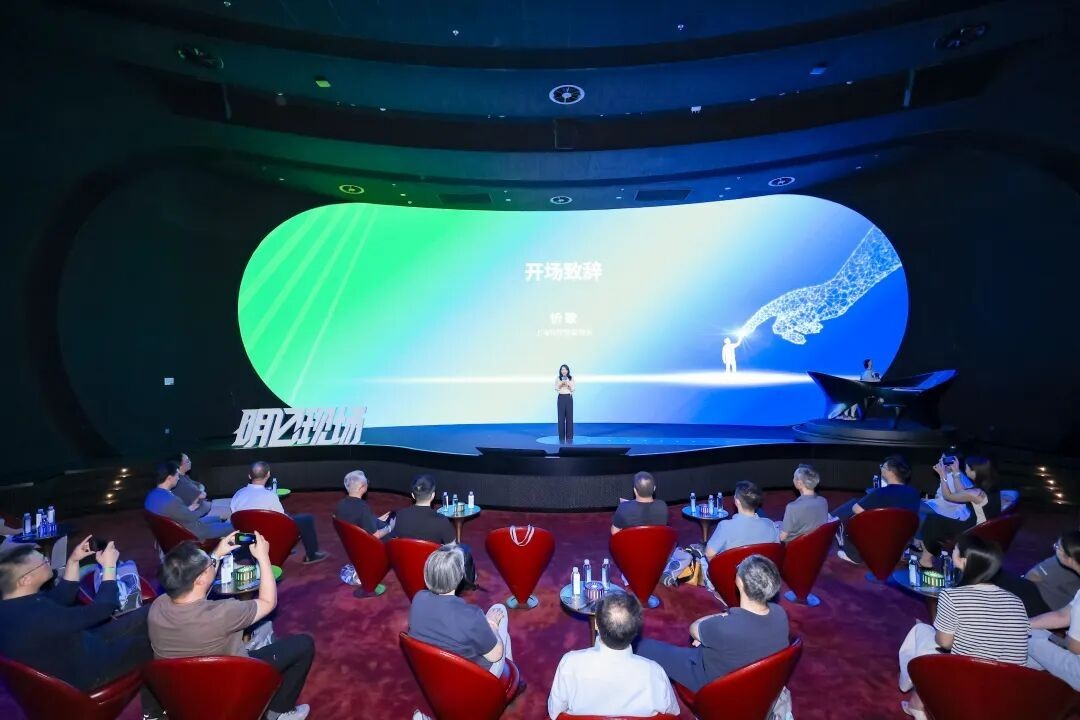
On the evening of July 4, the SSTM launched its new theater-based science and technology culture brand, the "Tomorrow Live" Pioneers' Salon. Guided by the core philosophy of "Bringing Tomorrow's Questions into Today's Public Forum," the event made use of the museum's "City of Tomorrow" theater space to invite scientists, industry innovators, and scholars of society and culture to engage in in-depth discussions and exchanges of ideas. By bringing cutting-edge technologies out of laboratories and into the realm of public reflection, the event established a platform for forward-looking discussions on science, technology, and culture in the city.
Today, cutting-edge technologies are advancing at a rapid pace, and human-machine symbiosis is no longer a concept confined to science fiction but a real-world issue that is already taking shape. The inaugural Pioneers' Salon focused on "Beyond Symbiosis: The Future Relationship Between Humans and AI," bringing together pioneers from the fields of brain-computer interfaces, embodied intelligence, and science fiction literature. Through immersive intellectual dialogue, they jointly explored new questions concerning human-machine relationships in the age of artificial intelligence. The speakers delivered keynote presentations from three perspectives: technological frontiers, industrial prospects, and the boundaries between humans and machines.
In the presentation themed "Connecting the Brain to the Future," the speaker began by exploring the uniqueness of the human brain, pointing out that brain-computer interfaces serve as a bridge for symbiosis between carbon-based and silicon-based systems and represent an inevitable path in human evolution. At the current stage, China's approach focuses on the pressing clinical needs of treating patients with serious brain diseases. As the technology continues to develop and becomes more widely accessible, brain-computer interfaces will inevitably enable humans to possess AI capabilities in the future, transcend their own physical limitations, and break through the boundaries of human existence and cognition.
In the presentation themed "When Intelligence Takes Physical Form," the speaker pointed out that true intelligence lies in having a body capable of taking action. Rehabilitation medicine provides a gateway to understanding the body and serves as the most authentic testing ground for human-machine interaction. He proposed that movement encompasses three levels: "reflex, rhythm, and intention," through which the body becomes an integral part of intelligence. The future of robotics will not depend on any single technology but on the reorganization of relationships. Enabling machines to better understand humans is intended to allow technology to serve people more effectively.
In the presentation themed "The Boundaries Between Humans and Machines Are Becoming Blurred," the speaker pointed out that humans are relinquishing the act of thinking, while cognition, aesthetics, and behavior are being transformed into computable resources. What humanity needs to be wary of is not only whether machines possess consciousness, but also whether humans are becoming accustomed to not thinking. He recommended maintaining flexible boundaries and continuous awareness to identify risks in advance.
Following the three presentations, Ni Minjing, Director of SSTM, moderated a roundtable forum and an interactive session. The three speakers and 70 guests in attendance engaged in lively discussions on topics including technological fairness, human agency, and educational awareness. The exchange of diverse perspectives provided the audience with multidimensional and comprehensive insights.
Looking ahead, SSTM will continue to develop high-quality science and technology culture brands and content, such as "Tomorrow Live," so that science communication venues not only preserve the past and showcase the present but also look toward the future. By guiding the public to understand the symbiotic relationship between technological development and human society, SSTM aims to encourage deeper public participation in discussions on technology ethics and scientific decision-making, contributing to Shanghai's development as a science and technology innovation center with global influence.

 LINK :


