
Frontier Achievements in Meteorological Science and Technology Presented at the 236th Session of the Shanghai Science Communication Forum
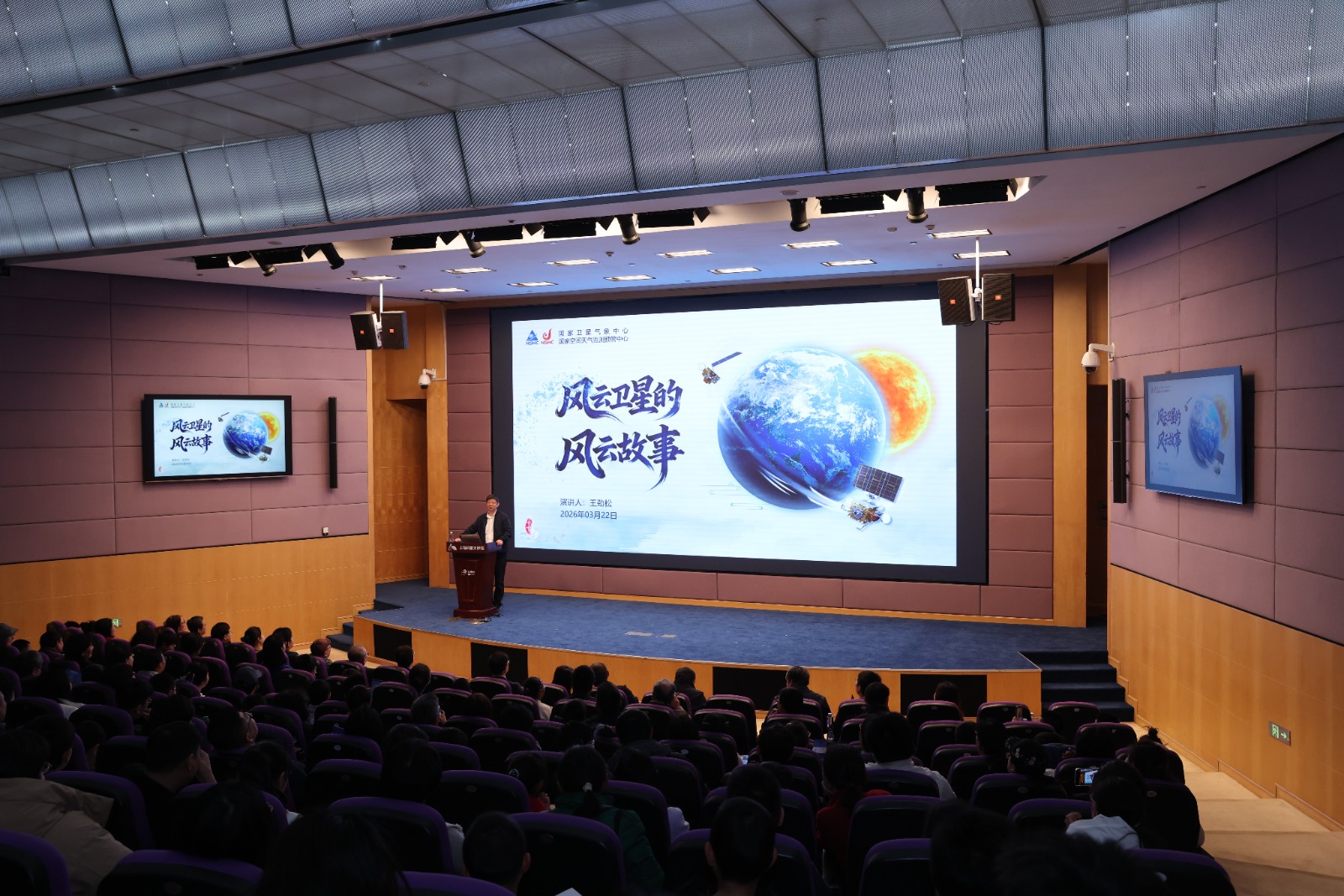
On March 22, as the 2026 World Meteorological Day approached, the 236th session of the Shanghai Science Communication Forum, together with the Guangqi Technology Forum, was held. Centered on the theme “The Story of Fengyun Satellites,” the event decoded the technological secrets behind these space based “far seeing eyes” that observe weather and safeguard our homeland.
During the event, a researcher from the National Satellite Meteorological Center delivered a dedicated science lecture, reviewing in detail the development journey of the “Fengyun” satellite series from its inception, recounting the stories behind the research team’s breakthroughs in overcoming key technological challenges, and showcasing the perseverance and dedication of generations of meteorological and aerospace professionals. Ni Minjing, Director of the Shanghai Science and Technology Museum (SSTM), Lei Xiaotu, Deputy Director of the Shanghai Meteorological Service, and researchers from the Shanghai Academy of Spaceflight Technology engaged in discussions on “Frontier Technologies of Fengyun Satellites and Approaches to Science Communication,” exploring the integration of meteorology and aerospace technologies, pathways for the widespread public dissemination of meteorological satellite science, and methods for balancing the professionalism of meteorological science with the accessibility of science communication.
This meteorological science outreach event was highly favored by the public. It not only attracted enthusiastic participation from local science enthusiasts, teachers, students, and parents in Shanghai, but also drew attendees from other cities who traveled across regions to take part, demonstrating the strong appeal of high quality and in-depth science communication in advanced technologies. During the interactive session, audience members actively raised questions on topics such as access to science communication resources, science and technology education in schools, and the application of meteorological technologies in everyday life, with experts providing responses closely aligned with public needs.
Since its launch in 2009, the Shanghai Science Communication Forum has successfully held 289 events, inviting 477 leading scientists from China and abroad to deliver lectures, and attracting a cumulative audience of over 39 million both online and offline, thereby generating extensive social impact.

 LINK :


