
Discovering the Beauty of Materials: Shanghai Science and Technology Museum Launches "Young Science Interpreters" Program
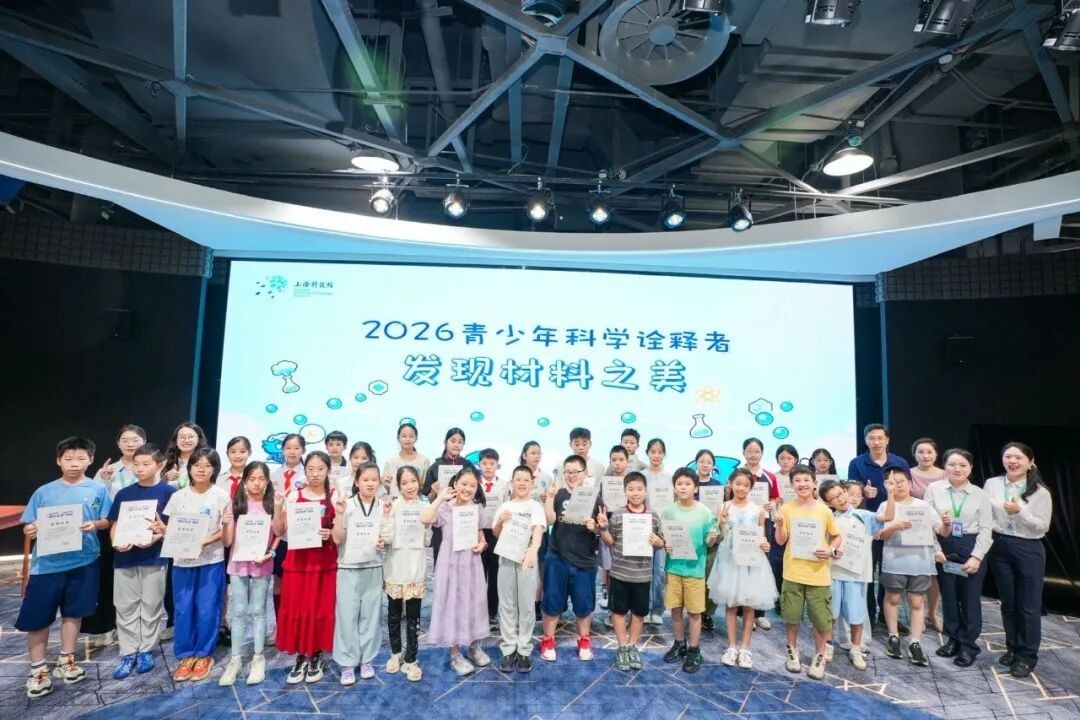
In 2026, SSTM unveiled its newly renovated "Materials Cube" exhibition area, integrating science, art, and design through an interdisciplinary approach to transform the rational aspects of science and technology into expressive aesthetic experiences. Against this backdrop, this year's "Young Science Interpreters" program at SSTM centered on the theme "Discovering the Beauty of Materials," guiding young participants through the entire process of scientific knowledge development, from initial discovery and encoding into exhibition displays to creative interpretation. The program enabled them to become guardians, interpreters, and storytellers of the scientific stories presented in the new exhibition hall.
During the training sessions, the young participants explored the "Materials Cube" exhibition area, observed various material exhibits up close, and experienced the properties of different materials through interactive installations, developing an interest in materials science through independent exploration. Li Xiaotong, curator of the exhibition area, shared the stories behind the exhibits and revealed the entire process of transforming scientific and technological achievements into science exhibitions. Zhang Wei from the College of Smart Materials and Future Energy at Fudan University delivered a science lecture introducing the unique structures and properties of novel materials, including mesoporous materials, sparking the children's keen interest in exploring the beauty of materials. Wang Siyi from the School of Cultural Heritage and Information Management at Shanghai University gave a presentation addressing questions such as "Why does science need interpretation?", "Who should interpret science?", and "How should science be interpreted?". Through vivid examples, the presentation helped the young participants understand the importance of interpretation in science communication and grasp the basic approaches to transforming complex scientific knowledge into engaging and accessible explanations.
On the day of the final presentation, the young participants took turns showcasing their carefully prepared science communication projects based on their respective themes. Their presentations covered topics such as "Amazing Optical Fibers and Optical Communication," "Shape Memory Metals," and "The Super Sponge of the Materials World," and were delivered through various formats, including model making, exhibit explanations, and experimental demonstrations. Outstanding projects received the "Best Science Interpretation Award," "Most Beautiful Artistic Expression Award," "Best Creative Transformation Award," and "Audience Favorite Award," respectively.

 LINK :


